Introduction: The Growing Communication Challenge for Businesses
In today’s fast-paced digital world, businesses are struggling to manage customer communication across multiple platforms. Customers reach out through WhatsApp, email, social media, websites, and mobile apps, expecting quick and consistent responses. However, many companies still rely on disconnected systems, manual handling, and scattered inboxes. This leads to delayed replies, lost conversations, frustrated customers, and missed sales opportunities. An Omnichannel messaging platform solves these problems by bringing all communication channels into one unified system, enabling businesses to respond faster, personalize interactions, and build stronger relationships with their audience.
What Is Omnichannel Messaging?
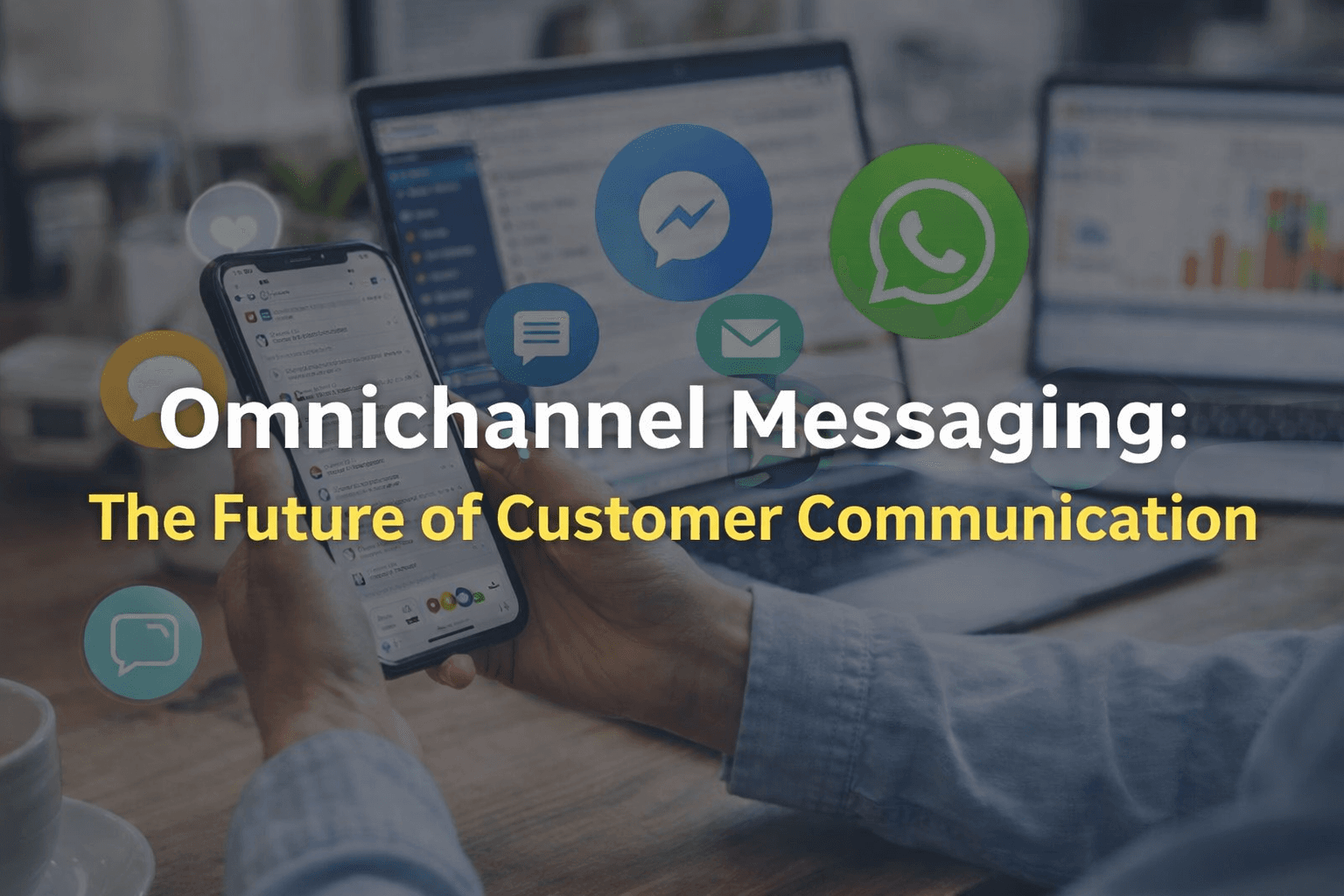
Omnichannel messaging is a communication strategy that allows businesses to interact with customers seamlessly across multiple digital channels while maintaining a consistent experience. Instead of treating each platform separately, omnichannel messaging connects them into a single workflow.
With a centralized dashboard, businesses can manage WhatsApp, SMS, email, social media, live chat, and app messaging in one place. This unified approach ensures that every customer interaction is tracked, recorded, and optimized, regardless of where it begins.
An effective Omnichannel messaging platform makes it possible to deliver personalized, real-time conversations that follow customers throughout their journey.
Why Businesses Need an Omnichannel Messaging Platform
Modern customers expect convenience, speed, and consistency. They may start a conversation on WhatsApp, continue it via email, and finish it on a website chat. Without an integrated system, businesses struggle to keep up.
Key benefits of using an Omnichannel messaging platform include:
Centralized communication management
Faster response times
Improved customer satisfaction
Better data tracking and analytics
Consistent brand messaging
By unifying channels, companies can avoid repetitive conversations and ensure that customers never have to repeat their concerns.
The Role of WhatsApp Marketing Automation in Omnichannel Strategies
WhatsApp has become one of the most popular communication tools worldwide. Businesses are increasingly using it for promotions, updates, and customer engagement. WhatsApp Marketing Automation allows companies to automate campaigns, responses, and follow-ups while maintaining a personal touch.
Through automation, businesses can:
Send order confirmations and delivery updates
Launch promotional campaigns
Schedule reminders and notifications
Collect customer feedback
Nurture leads automatically
When integrated into an Omnichannel messaging platform, WhatsApp Marketing Automation becomes even more powerful. It connects marketing efforts with support and sales, ensuring smooth customer journeys from discovery to conversion.
Enhancing Engagement with AI Powered Chatbots
Artificial intelligence has transformed customer communication. Chatbots now play a vital role in handling routine queries, booking requests, and information sharing. For example, a chatbot for travel industry businesses can manage flight inquiries, hotel bookings, itinerary updates, and customer support efficiently.
A well-designed chatbot can:
Provide instant 24/7 responses
Reduce support workload
Improve lead qualification
Offer personalized recommendations
Handle high volumes of inquiries
When integrated into omnichannel systems, chatbots ensure that customers receive immediate assistance across all platforms without compromising service quality.
Understanding WhatsApp RCS Services for Business
Rich Communication Services (RCS) represents the next evolution of messaging, combining the simplicity of SMS with advanced features such as images, buttons, carousels, and read receipts. WhatsApp RCS services for business enable brands to deliver interactive, visually appealing messages that improve engagement.
These services allow businesses to:
Send branded messages
Include call-to-action buttons
Share multimedia content
Enable real-time confirmations
Track user interactions
By incorporating WhatsApp RCS services for business into an omnichannel strategy, companies can create more immersive customer experiences and strengthen brand trust.
Building Stronger Relationships with Multi Channel Customer Support Chat
Customer support is one of the most critical areas of business success. Today’s customers expect instant, helpful, and personalized support across platforms. A multi channel customer support chat system ensures that businesses can meet these expectations.
With multi channel customer support chat, companies can:
Manage all inquiries from one interface
Assign tickets automatically
Track conversation history
Monitor agent performance
Provide faster resolutions
This approach reduces confusion, improves accountability, and enhances overall service quality. Customers feel valued when their issues are resolved quickly and efficiently.
How Omnichannel Messaging Improves Customer Experience
Customer experience is no longer limited to product quality or pricing. Communication plays a major role in shaping brand perception. Omnichannel messaging helps businesses deliver seamless experiences at every touchpoint.
Key improvements include:
Consistent messaging across platforms
Personalized interactions
Reduced waiting times
Better issue resolution
Stronger emotional connections
By leveraging an Omnichannel messaging platform, businesses can transform ordinary interactions into meaningful relationships that drive loyalty and retention.
Data, Analytics, and Performance Tracking
One of the biggest advantages of omnichannel systems is access to unified data. Every interaction is stored and analyzed, providing valuable insights into customer behavior and preferences.
Businesses can use analytics to:
Identify high-performing channels
Measure campaign effectiveness
Track customer satisfaction
Optimize response strategies
Improve marketing ROI
When combined with WhatsApp Marketing Automation and chatbot integrations, data-driven decisions become more accurate and impactful.
Omnichannel Messaging in Different Industries
Omnichannel messaging is not limited to one sector. It benefits businesses across industries:
Retail and E-commerce
Retailers use omnichannel tools to manage orders, promotions, and customer queries efficiently.
Travel and Hospitality
A chatbot for travel industry applications helps manage bookings, cancellations, and real-time updates.
Healthcare
Hospitals use messaging systems for appointment reminders and patient support.
Banking and Finance
Financial institutions rely on secure omnichannel platforms for alerts and customer assistance.
Restaurants and Food Delivery
Restaurants use messaging to automate orders, reservations, and feedback collection.
Best Practices for Implementing Omnichannel Messaging
To maximize the benefits of omnichannel communication, businesses should follow these best practices:
Choose a reliable Omnichannel messaging platform
Integrate all major customer touchpoints
Use WhatsApp Marketing Automation wisely
Deploy intelligent chatbots for efficiency
Train support teams effectively
Monitor performance regularly
Prioritize data security and compliance
A strategic approach ensures long-term success and sustainable growth.
Future Trends in Omnichannel Communication
The future of omnichannel messaging is driven by artificial intelligence, personalization, and predictive analytics. Emerging trends include:
AI-powered conversation analysis
Voice-enabled chatbots
Hyper-personalized messaging
Advanced WhatsApp RCS services for business
Integration with CRM and ERP systems
Businesses that adopt these innovations early will gain a competitive advantage in customer engagement.
Conclusion: Why Omnichannel Messaging Is Essential
Omnichannel messaging is no longer optional for modern businesses. It is a strategic necessity for delivering exceptional customer experiences, improving operational efficiency, and driving growth. By adopting an Omnichannel messaging platform, integrating WhatsApp Marketing Automation, utilizing chatbot for travel industry solutions, leveraging WhatsApp RCS services for business, and implementing multi channel customer support chat, companies can stay ahead in an increasingly competitive market.
Investing in omnichannel communication today ensures stronger customer relationships, higher satisfaction, and sustainable business success in the digital age.